Las Vegas never settles for ordinary. Known for reinvention, this city thrives on spectacle—whether it’s entertainment, architecture, or cuisine. While Madrid’s Sobrino de Botín holds the title of the world’s oldest restaurant, Las Vegas built its culinary fame on daring innovation rather than preservation. Here, neon lights guide not only gamblers but also food lovers in search of unforgettable flavors.
When Las Vegas officially became a city in 1905, it was a dusty railroad stop with little more than whiskey, stew, and determination. Early settlers craved both adventure and sustenance, paving the way for the vibrant dining scene that thrives today. From hidden bars during Prohibition to sleek celebrity kitchens, every meal tells part of this city’s story.
Where It All Began
In its infancy, Las Vegas offered little beyond bar snacks and boarding house meals. The Arizona Club, established in 1905, earned the title of the city’s first bar, serving weary travelers and railroad workers. Just nearby, the Golden Gate Hotel and Casino offered comfort with a touch of rebellion. Even during Prohibition, its hidden bar kept the spirit alive, literally.
The city’s real food revolution began in 1931. The legalization of gambling and the construction of the Hoover Dam brought thousands of workers, each hungry for a taste of home. That demand gave rise to the first generation of Las Vegas eateries, simple, hearty, and fueled by grit.
The Oldest Restaurant Still Standing
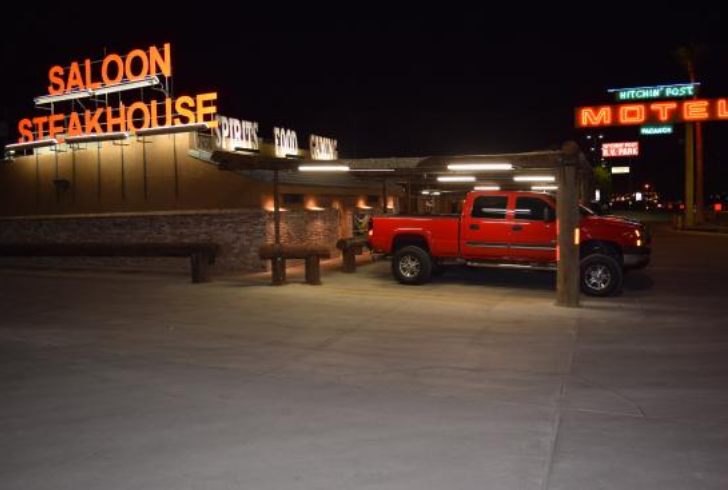
Beachvolleyballer | Las Vegas honors its roots as locals gather at its oldest food spots filled with history and heart.
North Las Vegas still holds one of its most authentic treasures: the Hitchin’ Post Saloon & Steakhouse. Since 1948, it has continued to serve locals and travelers with the same rustic charm. Long before celebrity chefs arrived, this place offered thick-cut steaks, cold drinks, and warm hospitality. Even now, it stands as a living tribute to Old Vegas, reminding everyone where the city’s food roots began.
Another enduring legend, Atomic Liquors, began life as Virginia’s Café in 1945. It transformed in 1952 into a bar with Las Vegas’s first tavern license, license No. 00001. Locals gathered here not just for drinks but for community, making it one of the longest-operating bars in the city.
The Rise of Family Flavor
Some of Las Vegas’s greatest culinary stories began with family. In 1955, Angie and Lou Ruvo partnered with Maria and Al Perry to open the Venetian Pizzeria on Fremont Street, the city’s first pizzeria. Their success led to the creation of the Venetian Ristorante, a fine dining establishment that became a beloved local gem for decades.
That family’s legacy continues in more ways than one. When developer Sheldon Adelson opened “The Venetian Resort Las Vegas” in 1999, he honored the Ruvos by supporting the Lou Ruvo Center for Brain Health. The family’s original restaurant building still stands, now home to Herbs and Rye, one of the city’s most acclaimed cocktail lounges. In this space, history and mixology share the same table.
When Food Met Glamour
By the 1950s, Las Vegas had transformed into a city of spectacle. Dining evolved from necessity to experience. Restaurants became places to see and be seen, where Rat Pack members and movie stars shared meals with fans. Yet, not every era was smooth.
In the 1970s, tensions between labor unions and off-Strip establishments escalated dramatically. The Alpine Village Inn, known for its schnitzel and fondue, suffered a series of bombings that shocked diners but couldn’t dim the city’s culinary spirit. Even mob figure Frank “Lefty” Rosenthal famously survived a car bombing outside “Tony Roma’s” in 1982, adding another unforgettable chapter to Las Vegas’s food lore.
Enter the Era of Celebrity Chefs
The 1990s ushered in a bold transformation. When “Spago” by Wolfgang Puck opened in 1992, it changed everything. For the first time, dining in Las Vegas matched the sophistication of New York and Los Angeles. Puck proved that fine dining could thrive amid flashing lights and slot machines.
Then came “Smith & Wollensky”, opening in 1998 as the Strip’s first freestanding high-end steakhouse. With its prime cuts and signature green façade, it became a landmark for power lunches and lavish dinners.
This era cemented Las Vegas as a culinary powerhouse. Food wasn’t just an accessory to gambling anymore; it became a main attraction.
A Flavor Explosion in Modern Vegas
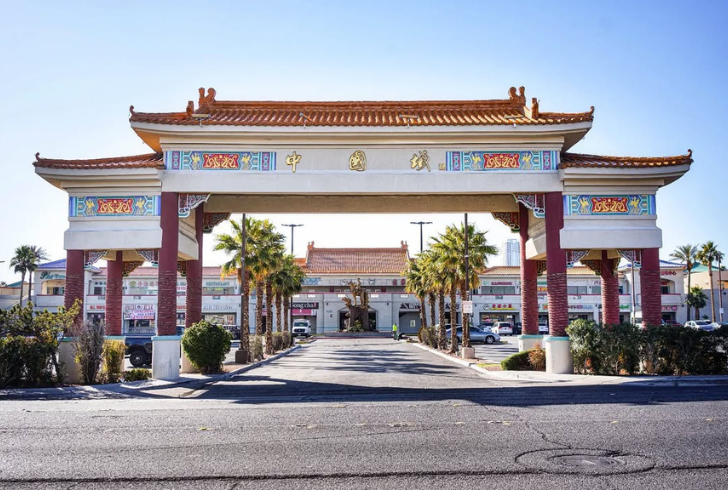
Instagram | @jacksofftoanadventures | A city built on reinvention finds its soul in the kitchens of Chinatown and beyond.
As Las Vegas grew, its culinary identity grew with it. Southern Nevada became home to vibrant Asian, Hawaiian, and Pacific Islander communities, each bringing their own cooking traditions—and new energy—to the region.
In 1995, Taiwanese American developer James Chen imagined something the city had never seen: a purpose-built Chinatown. Four years later, Chinatown Plaza opened its doors. That early spark has since expanded into a long stretch along Spring Mountain Road, now packed with more than 150 restaurants serving everything from dim sum to Korean barbecue to fiery Sichuan classics.
Hawaii’s imprint—Nevada’s famous “Ninth Island” connection—is everywhere as well. Poke bowls, plate lunches, and island-style comfort dishes have woven themselves into local menus, adding another layer to Vegas’ evolving food story.
Art, Food, and Reinvention
By the late ’90s, the Arts District had begun its makeover. Holsum Bakery’s bread-scented warehouses gave way to studios, galleries, and an eclectic mix of restaurants. Movers like Wes Myles and the late Tony Hsieh helped turn the neighborhood into a cultural anchor. Fremont East experienced its own revival, drawing diners downtown with everything from wood-fired pies to Thai street eats.
Henderson and Summerlin also grew into destination dining zones. Henderson’s Water Street now offers polished restaurants with neighborhood warmth, while Downtown Summerlin blends easygoing bites and elevated plates with Red Rock Canyon as its backdrop.
Southern Nevada’s Culinary Future
Vegas’ dining identity is now shaped by chefs who once trained under industry giants like Joël Robuchon, Gordon Ramsay, and Thomas Keller. Many have broken out on their own, creating kitchens defined by personal style rather than casino spectacle.
From mom-and-pop storefronts in Chinatown to landmark restaurants on the Strip, the region thrives on experimentation and cultural exchange. Each chapter builds on the last, honoring the risk-takers who helped turn Las Vegas into a world-class food destination.
Beyond the casino floors sits a living, breathing food culture—proof that the most memorable parts of Southern Nevada often come plated, not played.