A handful of nuts might do more than keep afternoon hunger under control. New research suggests regular nut intake could also have a useful connection to memory and thinking skills as people get older.
The latest findings come from research published in the journal Food & Function. Researchers found that adults without a history of stroke who ate more nuts tended to perform better on tests of memory and overall thinking ability. The results add to growing interest in how everyday foods may support the aging brain. Nuts contain healthy fats, fiber, protein, vitamins, minerals, and plant compounds, making them an interesting target for scientists studying nutrition and cognitive health.
The research shows an association between eating nuts and better brain health, but it does not prove that adding almonds or walnuts to breakfast will prevent cognitive decline.
Higher Nut Intake Was Linked to Better Cognitive Scores

Dan / Pexels / Per the study, higher nut consumption is associated with higher blood levels of vascular endothelial growth factor, called ‘VEGF.’
Researchers analyzed information from 1,771 participants in the long-running Framingham Heart Study. Participants had an average age of 61 and completed detailed dietary surveys along with several tests designed to measure memory and thinking skills.
Among people who had never experienced a stroke, higher nut consumption was associated with stronger cognitive test results. The connection remained after researchers accounted for age, education, smoking, physical activity, and overall diet quality.
Researchers tried to separate those influences as much as possible. Even after doing so, the association between higher nut intake and stronger cognitive performance remained. The link became particularly interesting among people with lower-quality diets and lower levels of physical activity. In those groups, greater nut intake showed an even stronger association with better cognitive scores.
However, that does not mean nuts can cancel out an unhealthy diet or a sedentary lifestyle. It does suggest that a simple food choice could have value as one part of a broader approach to healthy aging. Researchers also spotted a connection between nut consumption and total brain volume. However, that association appeared only among participants who were the most physically active.
Almonds and Peanuts Have Also Shown Promising Results
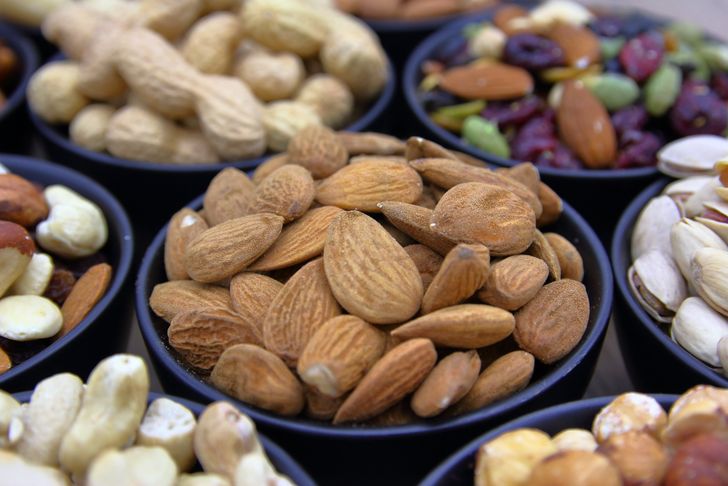
Jor / Pexels / A small randomized trial published in The Journal of Nutrition examined raw, unroasted almonds in people with prediabetes. Participants in the almond group ate enough almonds to provide about 20% of their daily calorie needs.
According to the study, that worked out to roughly 1 to 1.4 ounces per day. Participants eating almonds showed improvements in some measures of executive function, processing speed, and reaction time. The almond group also experienced improvements in weight and blood sugar management compared with their starting measurements. Those changes could matter because metabolic health and brain health are closely connected.
Neurologist Anna Hohler, MD, explained that prediabetes involves problems with glucose regulation and insulin resistance. Those problems may affect how efficiently the body supplies the brain with the energy it needs. Almonds contain nutrients that may support blood sugar control while helping reduce inflammation and oxidative stress.
Peanuts have produced interesting results as well. A study published in "Clinical Nutrition" examined healthy adults between ages 60 and 75 who ate 60 grams of unsalted, skin-roasted peanuts each day. Following the peanut phase of the crossover trial, global cerebral blood flow increased by 3.6%. Researchers saw particularly notable changes in areas that included the frontal and temporal lobes.
Verbal memory scores also improved by 5.8%. The findings suggest that peanuts may influence brain function partly through changes involving blood vessels and circulation. Several nutrients could help explain that effect. Peanuts contain unsaturated fats, fiber, polyphenols, and L-arginine, an amino acid involved in the body's production of nitric oxide.
Nitric oxide helps blood vessels relax and supports healthy endothelial function. Better vascular function could potentially improve blood delivery to the brain, although researchers need larger and longer studies to establish the connection.