Fresh herbs can turn an ordinary dinner into something far more exciting. Basil adds a sweet aroma, cilantro brings a fresh punch, and chives give food a mild onion flavor. Still, careless chopping can weaken those flavors before the herbs even reach the pan.
Gordon Ramsay has a simple approach to avoid that problem. The 59-year-old iconic chef's method centers on two basic ideas: cut herbs cleanly instead of crushing them, then adjust the cutting technique to match the herb. The goal is to keep more aroma and flavor in the food instead of leaving it behind on the cutting board.
The difference starts with how herbs react to pressure. Fresh leaves contain aromatic compounds that create their familiar smell and taste. Heavy chopping can crush delicate leaves, releasing moisture and aromatic oils before they reach the finished dish.
That is why a cutting board sometimes smells intensely of basil or cilantro after rough chopping. Some of those aromatic compounds have escaped from the damaged leaves. Ramsay's technique limits unnecessary bruising by making cleaner cuts with less force.
Start With a Sharp Knife and the Three-Finger Rule
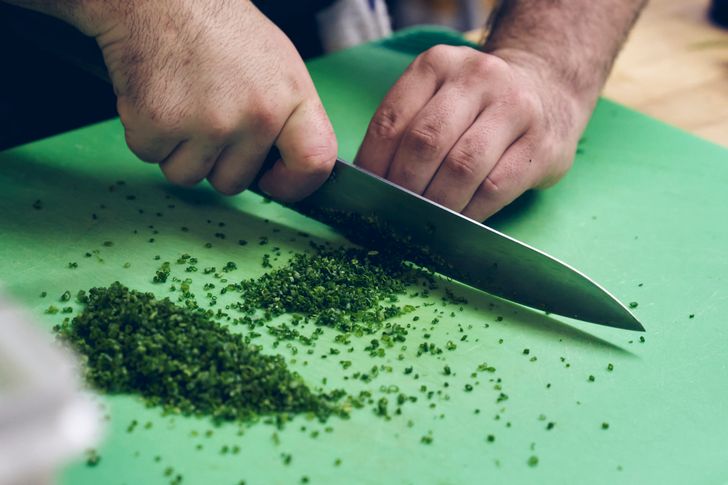
Korie / Pexels / The first part of Ramsay's herb chopping method starts with basic knife control. He uses what he calls ‘the three-finger rule,’ a simple hand position designed to protect the fingertips while giving the knife a steady guide.
The middle finger sits slightly ahead of the index and ring fingers. The fingertips remain tucked safely underneath, while the knuckles face the side of the knife blade. The middle knuckle then helps guide the blade as it moves through the food.
This position does more than protect fingers from accidental cuts. It also gives the cook better control over each movement. Controlled strokes make it easier to slice through herbs without repeatedly smashing the leaves against the board.
A sharp knife makes this technique much more effective. A dull blade needs extra pressure to push through soft leaves. Instead of making a neat cut, it can drag, tear, and crush the herbs as it moves. A properly sharpened blade needs much less force. It passes through leaves quickly, leaving cleaner edges and reducing the amount of bruising. That matters with herbs such as basil because damaged leaves can darken quickly after cutting.
Knife movement matters just as much as sharpness. Aggressive chopping may look fast, but speed means little when the blade repeatedly pounds delicate herbs. Smooth, controlled strokes give the cook precision without unnecessary pressure.
Ramsay's approach relies on letting the knife handle most of the work. The guiding hand controls the herbs, while the cutting hand moves the blade with purpose. There is no need to force the knife through a small pile of tender leaves.
Match the Cutting Method to the Herb
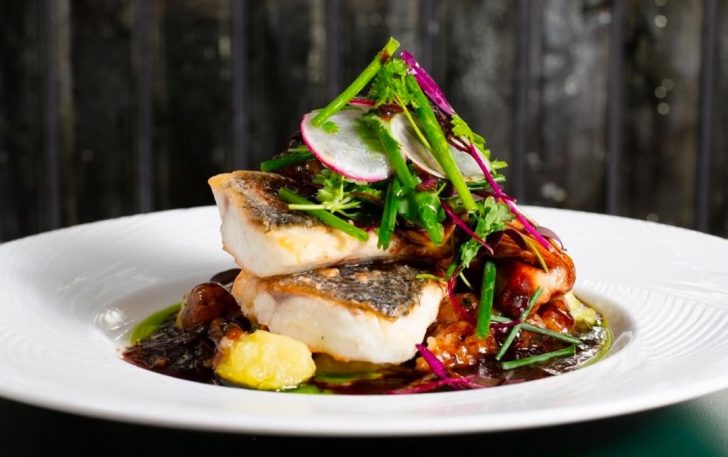
Ramsay / IG / Basil, cilantro, and chives have different shapes and textures, so treating them exactly the same makes little sense. Each benefits from a slightly different knife technique.
Basil provides a perfect example because its broad leaves bruise easily. Ramsay uses a chiffonade technique that turns a stack of basil leaves into thin, neat ribbons without requiring endless chopping. The process starts by stacking several basil leaves together. Larger leaves can sit underneath the smaller ones, creating an even pile that is easier to control. The leaves are then gently rolled into a tight cylinder.
The rolled basil gets sliced crosswise into narrow strips. Each stroke cuts through several leaves at once, which means the cook can prepare plenty of basil with relatively little handling. The finished ribbons also look cleaner than a roughly chopped pile.
This method works especially well when basil will remain visible in the finished dish. Thin ribbons can finish pasta, salads, soups, pizza, and tomato dishes without looking crushed or ragged. Cilantro needs a different touch because it has smaller leaves attached to slender stems. Ramsay's approach involves holding the bunch and using a sharp knife to shave the leafy sections away from the longer stems.
The separated leaves can then be gathered loosely before chopping. Keeping the pile loose prevents unnecessary compression, while a sharp knife makes quick work of the leaves without turning them into a wet green mass.